The Science Behind
Because every person is individually different,
the BioRICS technology only compares you with yourself
Improve with data and science
BioRICS has 20 years of experience with developing wearable software, based on 30 years of scientific research. BioRICS has developed algorithms and built a sound expertise to apply them in the field of human health tracking (physical condition, mental status, sleep quality and drowsiness). These algorithms are application-specific and have been made fit for integration into new, cutting-edge products of BioRICS and in those of their customers.
The BioRICS methodology
For aerobic energy production to happen, we breath air which the lungs bring into the blood. The heart pumps the oxygen-rich blood to cell level where metabolic energy is produced. Consequently, level of heartbeat is a measure for aerobic energy production. The BioRICS approach has focused on the decomposition of the heartbeat’s main components. By measuring continuously and monitoring the dynamic response of the heart rate throughout the day and the night, the basal metabolism and thermoregulation components are estimated whilst the physical component is measured using the accelerometer in the wearable.
The mental component is calculated thereof using the adaptive models which allow to distinguish the physical from the mental component. This principle has been validated in several scientific studies on humans (see pdf).
So, we monitor the distribution of heart rate (aerobic energy production) over the different components: basal metabolism, thermal component, physical and mental component. The unique strength of BioRICS is the fact that this monitoring is done:
- in real-time
- on moving subjects
- with individualised algorithms.

Publications & Patents
Basic principle
The methodology starts from the principle that living organisms (human, animal, plant) are individually different. Moreover, an indivual organism is continuously varying in time.

Monitoring Mental State: an Energy Balance Approach
The living human body is all about energy. Our body needs energy to perform any type of function, from the very basic of maintaining our bodily functions to physical performance and more complex activities such as problem solving.
The BioRICS methodology versus Heart Rate Variability (HRV)
Based upon total heart rate, HRV measures the variation in the time interval between consecutive heartbeats. As scientifically described, these variations relate to 16 possible reasons of which ‘stress’ is only one. Total heart rate is a combination of different components (the basal component to keep the organs functioning, immune system, body temperature control, physical activity, mental activity and the reproduction cycle). The BioRICS Biological Insight Layer decomposes total heart rate in these different components. Stress is detected using the mental component from total heart rate, which is a measure for the energy use for mental tasks.
Mental Energy Use and Recovery
The mental energy use represents all metabolic energy used for mental activities. This can be the result of different states such as positive or negative emotions, stress, focus, concentration, happiness, etc.
Recovery is that part of the dynamics which is not used by the body for extra mental expenditure. Mental recovery can happen when relaxing or working without time pressure for example during the day but most recovery is built during the night when sleeping. This is why a 24-hour monitoring is important.
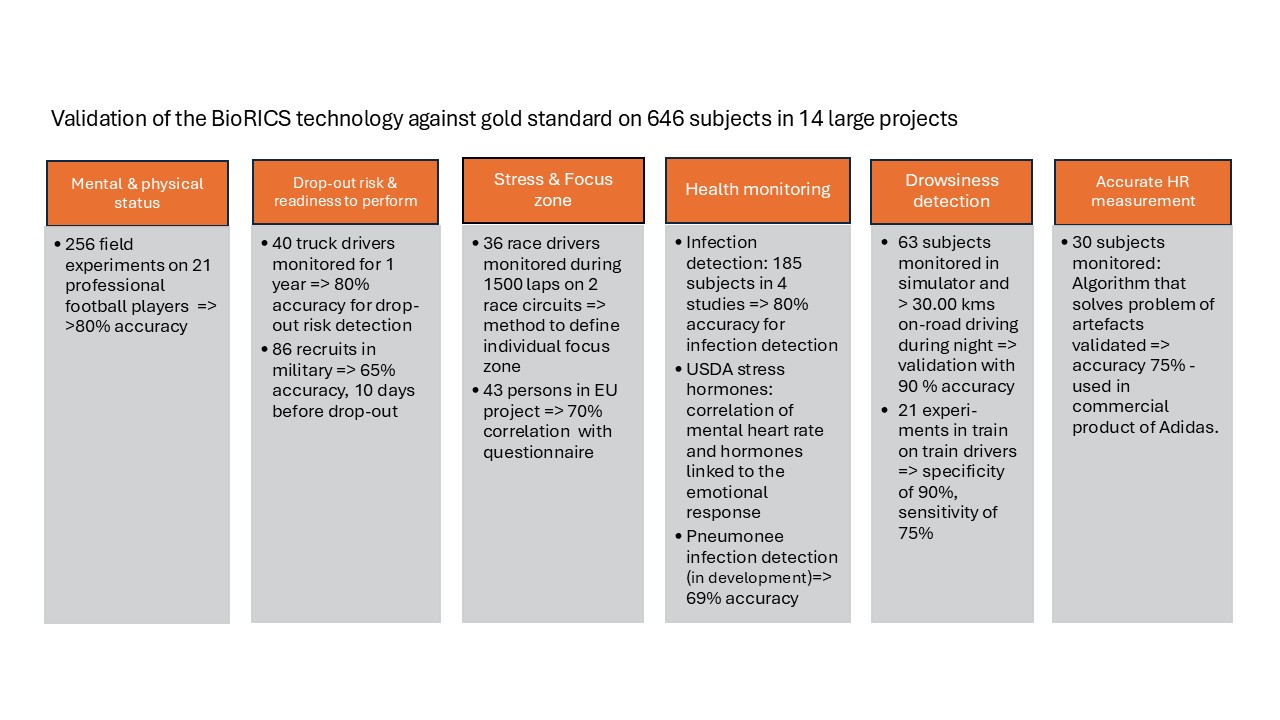
Quantative results & Validation studies
Table 1: examples of quantitive results of BioRICS algorithms in collaboration with KU Leuven, UGhent or industrial partners
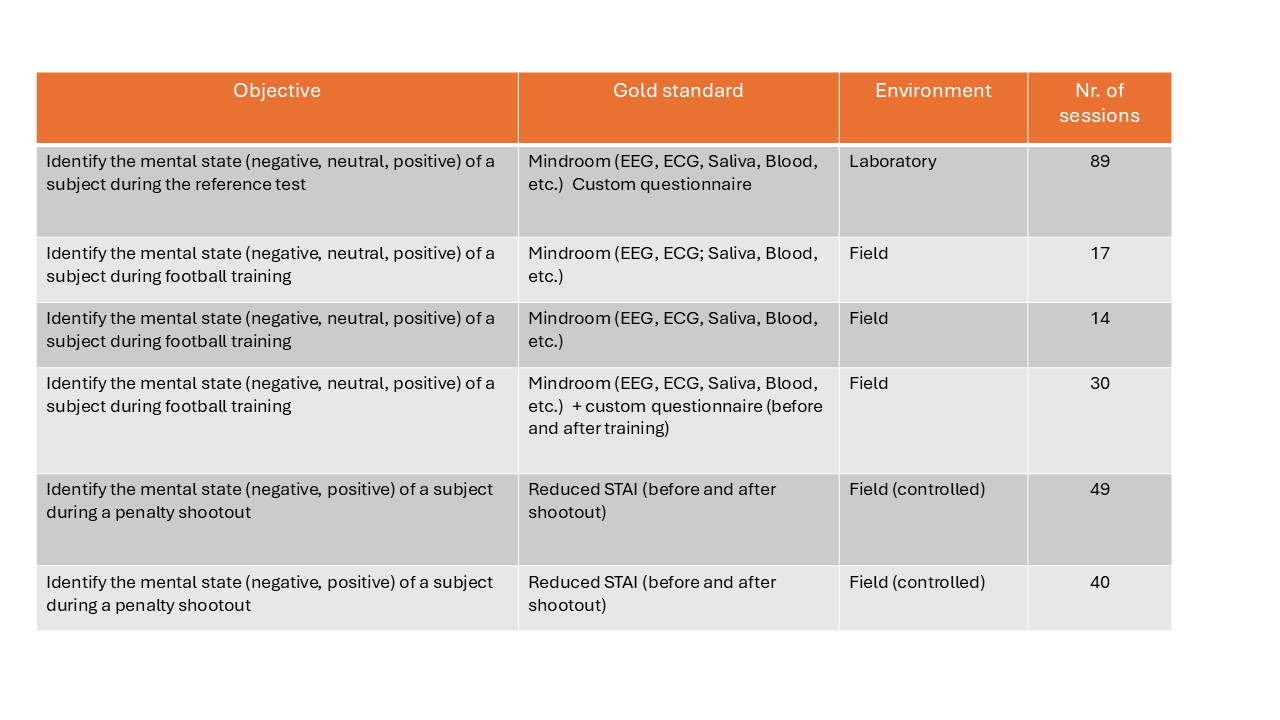
Table 2: validation studies conducted by BioRICS in collaboration with KU Leuven or industrial partners